Attractions & Entertainment, Museums & Historic Sites · Newton Featured
Sussex County Courthouse: The Building That Made Newton the County Seat
A Greek Revival landmark where fires, trials and Revolutionary-era turmoil shaped Newton’s county-seat story.
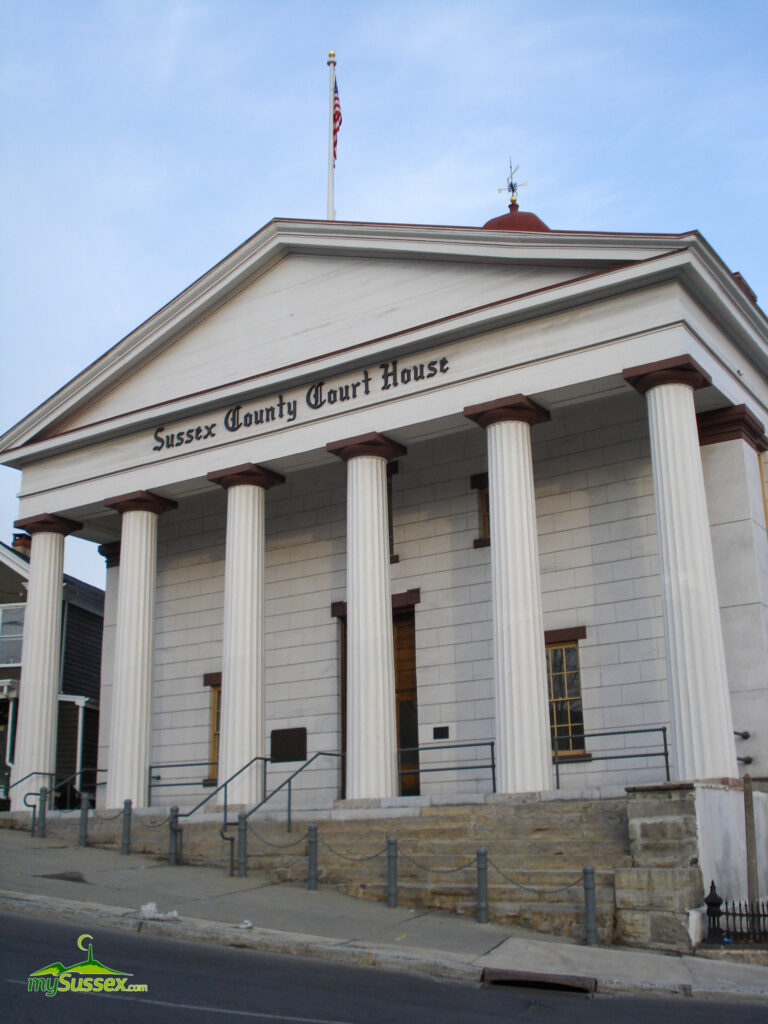
The Sussex County Courthouse is more than the most recognizable building on the Newton Green. It is the landmark that helped make Newton the seat of Sussex County government and the center of civic life for generations.
Sussex County was created in 1753, but the early county courts did not initially have a permanent home in Newton. Court was held in temporary locations, including a tavern near Johnsonburg, while officials decided where the county courthouse and jail should be located.
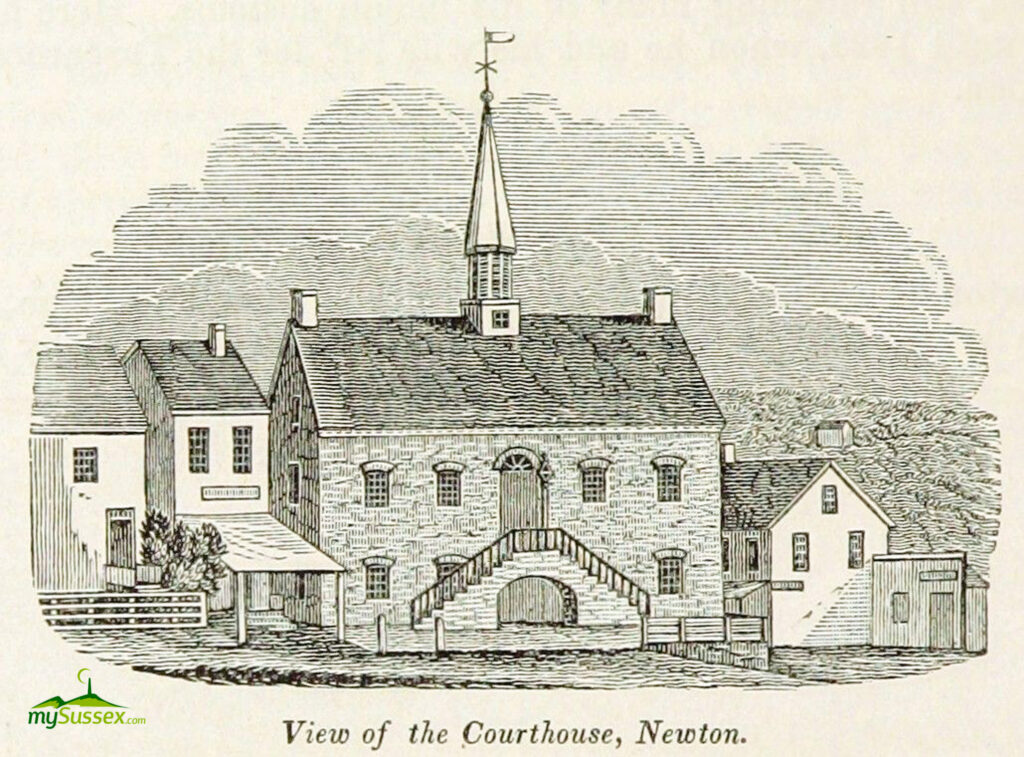
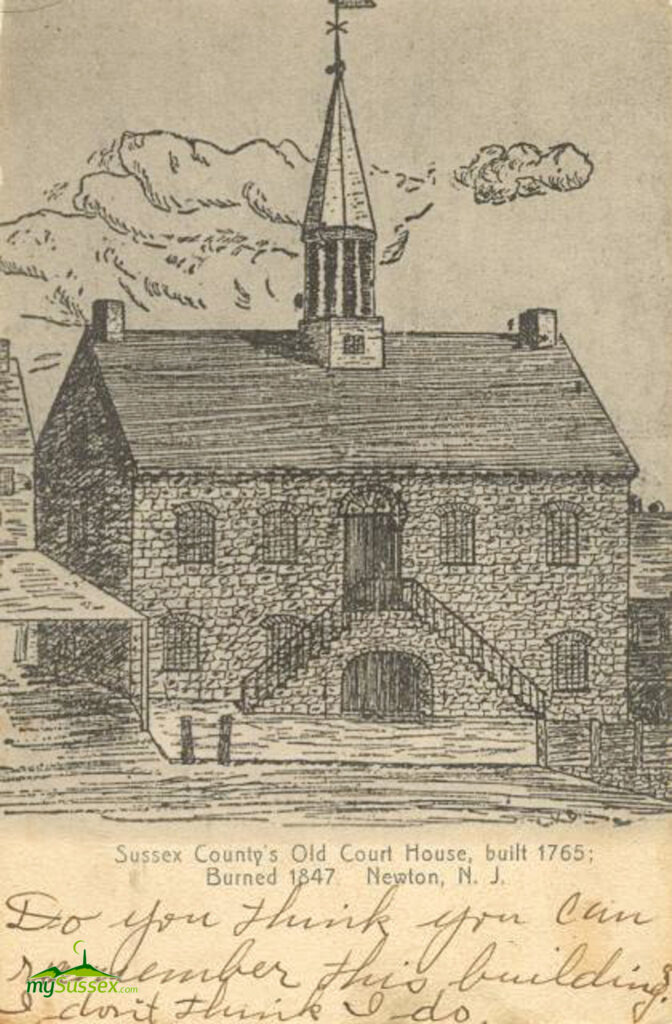
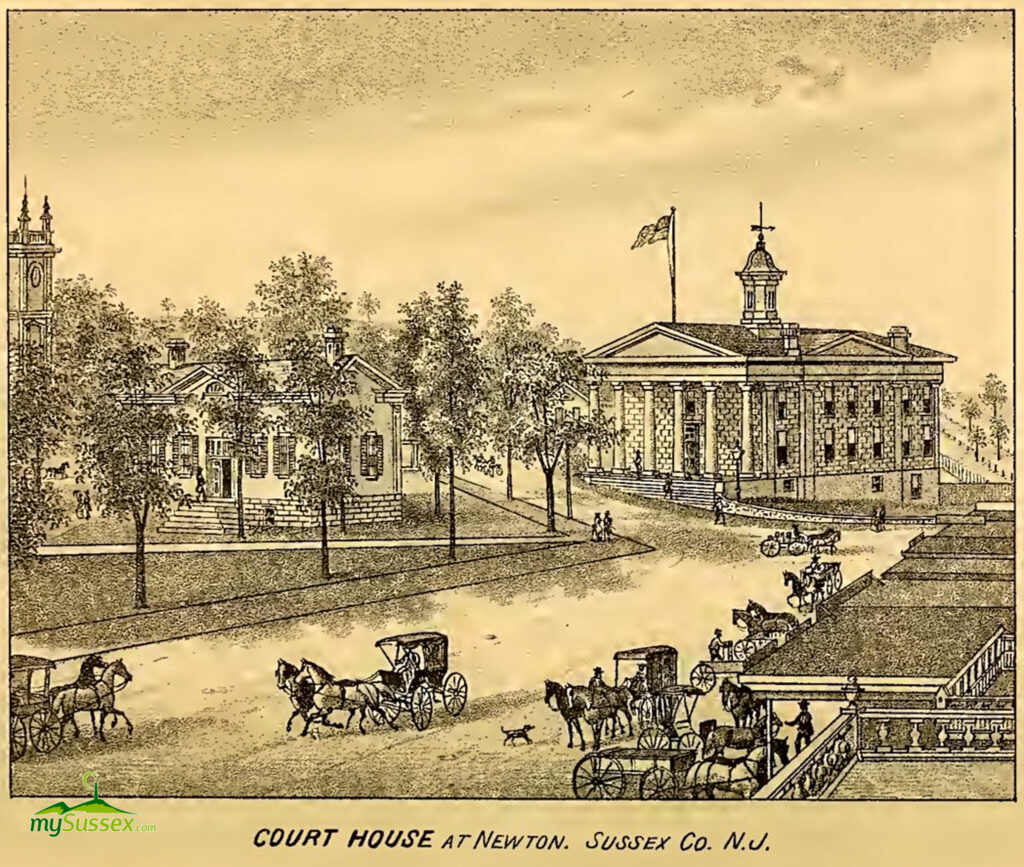
In 1761, the New Jersey Legislature approved construction of a courthouse and jail near the home of Henry Hairlocker. The decision placed Sussex County government on the hillside overlooking what would become the Newton Green. The original courthouse was constructed of local fieldstone and faced the public green, helping establish Newton as the county seat long before the town was formally incorporated in 1864.
Early maps identified the community as “Sussex Court House,” a reminder of how completely the courthouse shaped the identity and growth of Newton. Businesses, homes, taverns, professional offices, and public institutions grew around the courthouse and Green because this was where people came to handle county business.
A Courthouse at the Center of Revolutionary-Era Sussex County
The courthouse became an important local center during the American Revolution.
Militia members were recruited from the courthouse steps, county arms were stored there, and the building held prisoners of war, deserters, and state prisoners. General Horatio Gates passed through Sussex Court House in December 1776, and Benedict Arnold continued from Newton with troops heading toward Washington’s army near Trenton. George Washington also passed through the area more than once.
One of the courthouse’s most dramatic Revolutionary-era stories involves James Moody, a Loyalist raider and intelligence operative. In July 1780, Moody entered Newton at night with several men to free Loyalist prisoners being held in the Sussex County jail.
When the jailer refused to open the door, Moody reportedly threatened to pull the courthouse down around him. He then raised a war cry to frighten local residents before forcing his way into the jail and freeing the prisoners.
The episode is a vivid reminder that the Newton Green was not simply a quiet county seat during the Revolution. It was a place connected to military movement, divided loyalties, prisoner detention, and the uncertainty of wartime New Jersey.
The 1847 Courthouse Fire
The courthouse visitors see today is closely tied to a devastating fire on January 28, 1847.
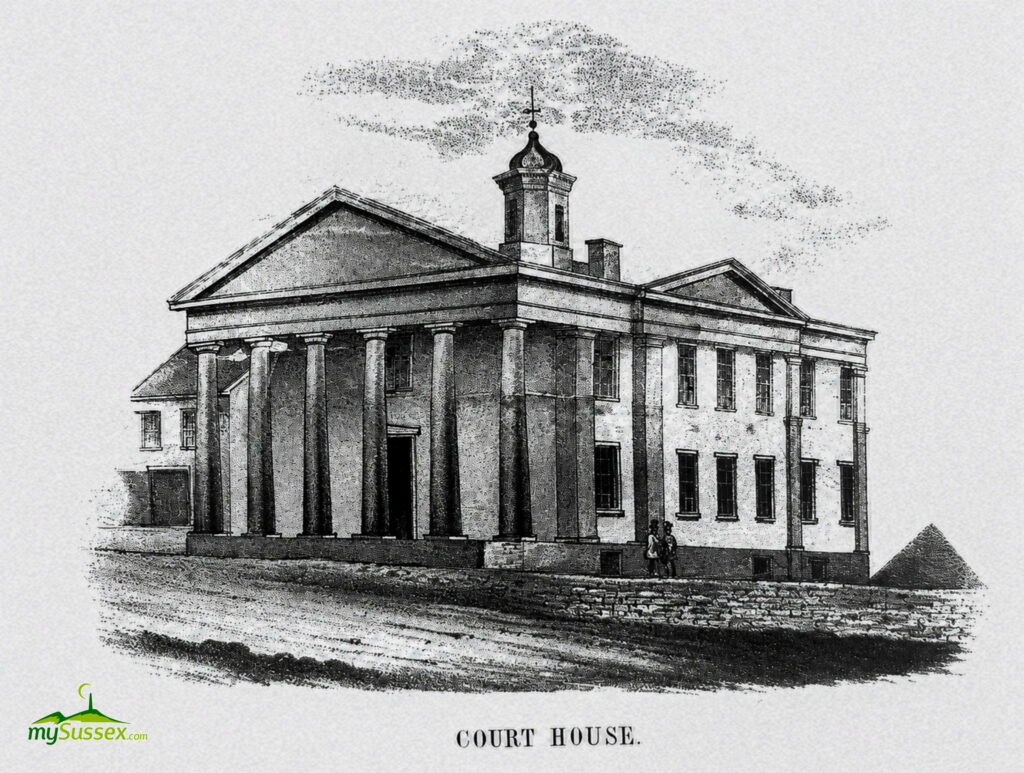
Only a few years earlier, Sussex County had improved the original courthouse. The project added a story, remodeled the courtroom, created a more imposing roofline, and introduced the columns and cupola that helped give the building a more formal civic appearance.
Then, in the winter of 1847, a faulty flue in the prisoners’ section caused a fire that destroyed the interior of the courthouse.
The county chose to rebuild on the same site for several practical reasons. Large portions of the original fieldstone walls remained standing. Reusing the existing walls was less expensive than beginning again elsewhere. The public grounds were also dedicated specifically for courthouse use, meaning relocation could have created legal and political complications.
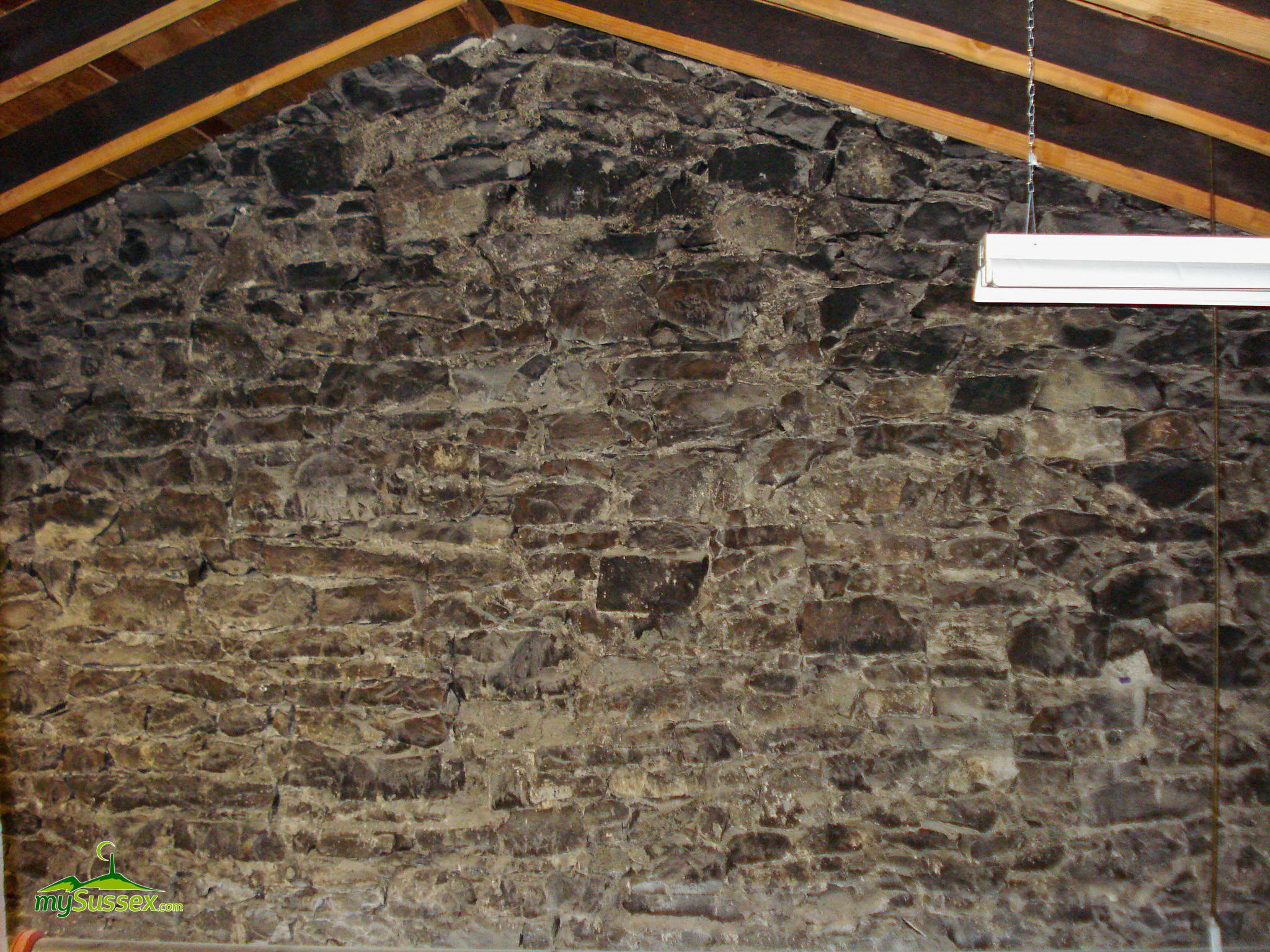
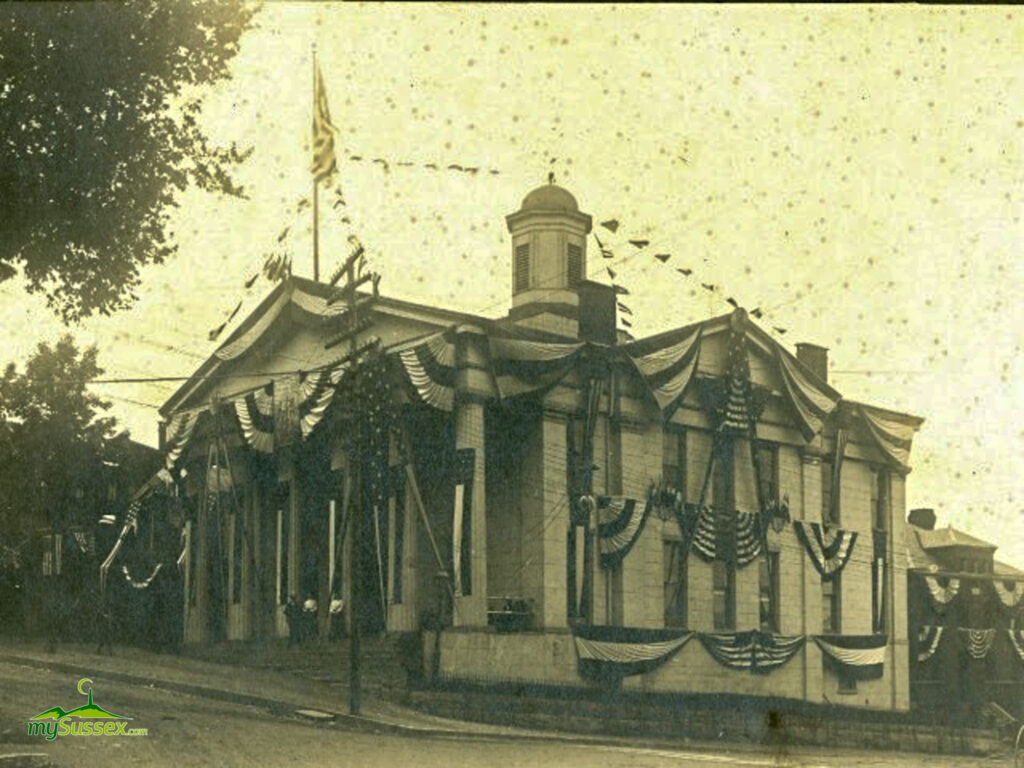
The rebuilt courthouse retained the original fieldstone walls beneath its white exterior plaster and emerged as one of Sussex County’s best examples of Greek Revival civic architecture.
Its six Doric columns, broad stone steps, symmetrical façade, pediment, pilasters, and cupola were designed to communicate stability, civic order, and public authority. The rebuilt courthouse reopened in 1848 and remains one of the defining landmarks of downtown Newton.
During the cleanup after the 1847 fire, workers recovered the courthouse’s old iron weathervane from the ashes. That artifact survives today and is displayed at the Hill Memorial Museum, the Sussex County Historical Society’s museum at 82 Main Street in Newton. It is a rare physical link to the original courthouse and a reminder that even after the fire destroyed the building’s interior, parts of its earlier history were saved.
A Look Inside the Courthouse Attic
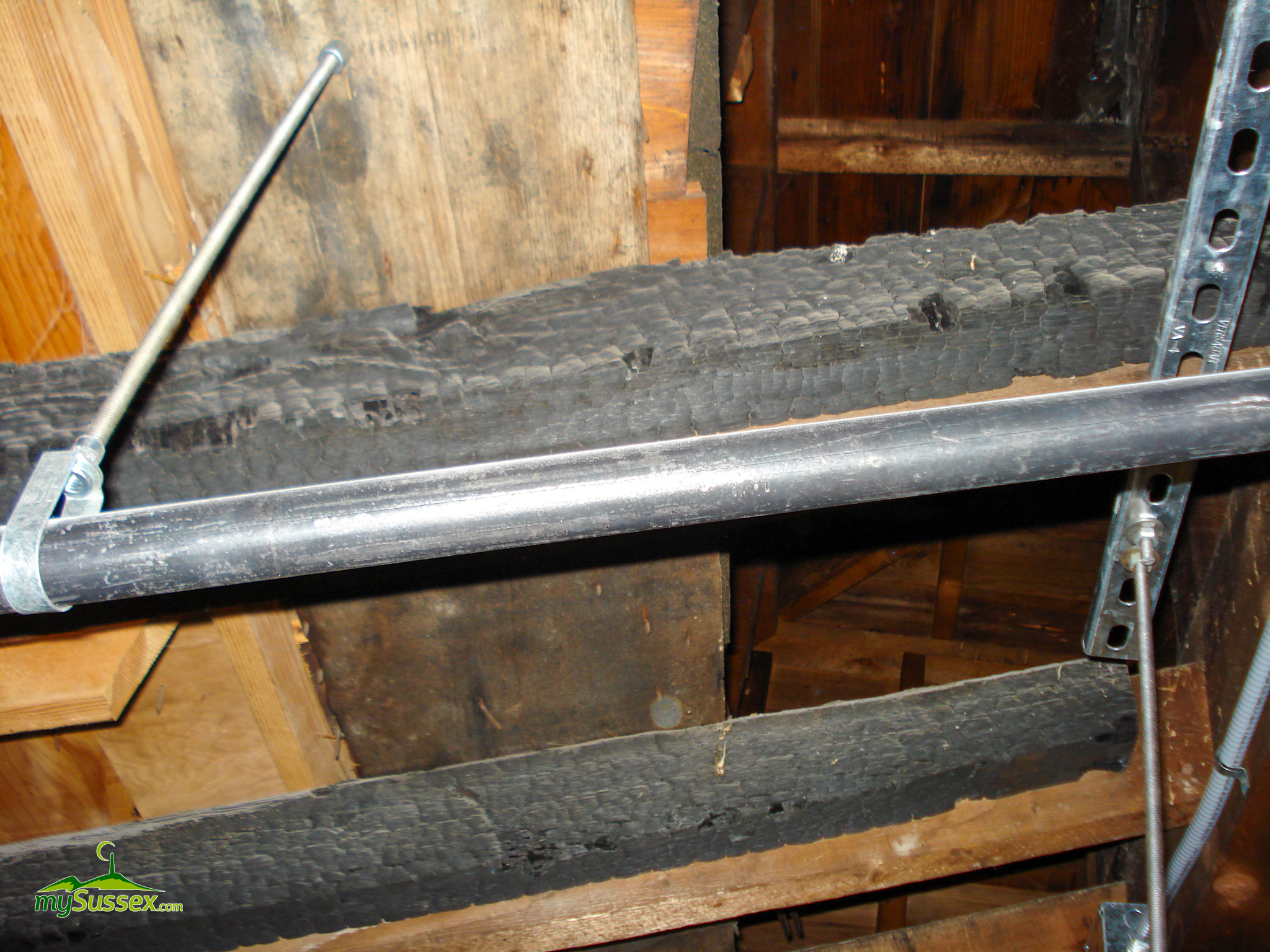
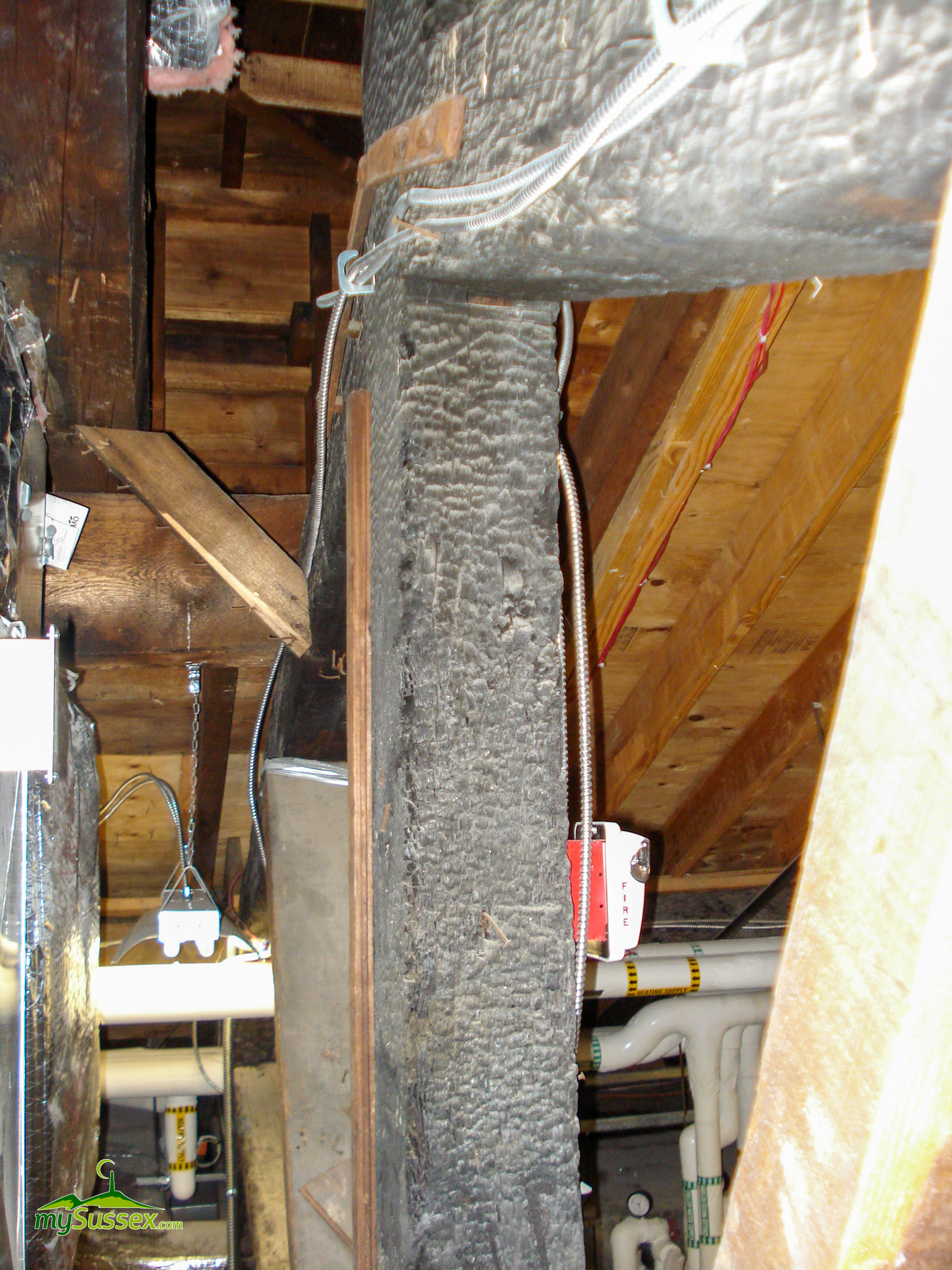
Several years ago, I was fortunate enough to take a tour of the courthouse and gain access to areas of the building that are normally off limits to the public.
The attic was the most memorable part of the experience.
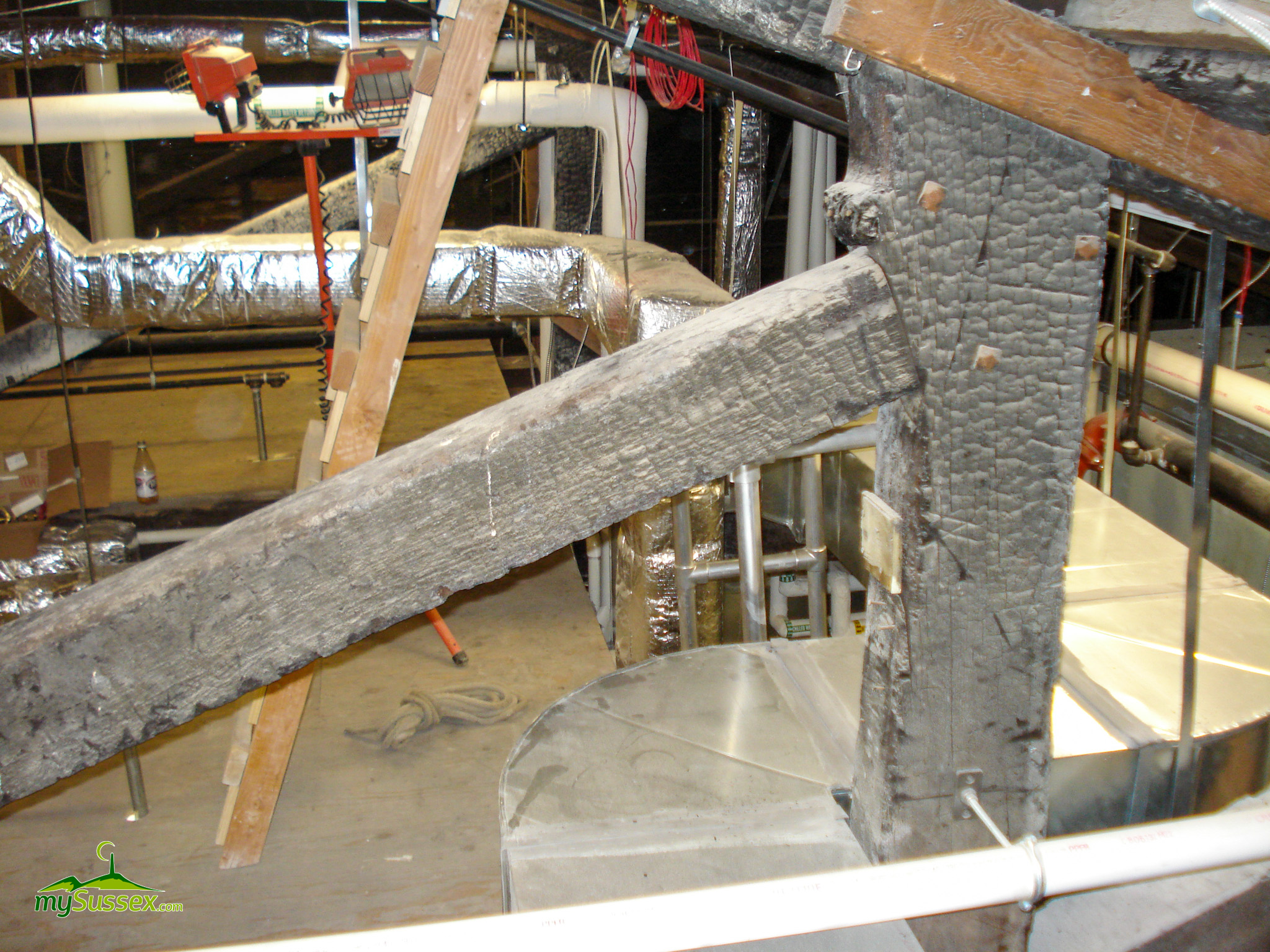
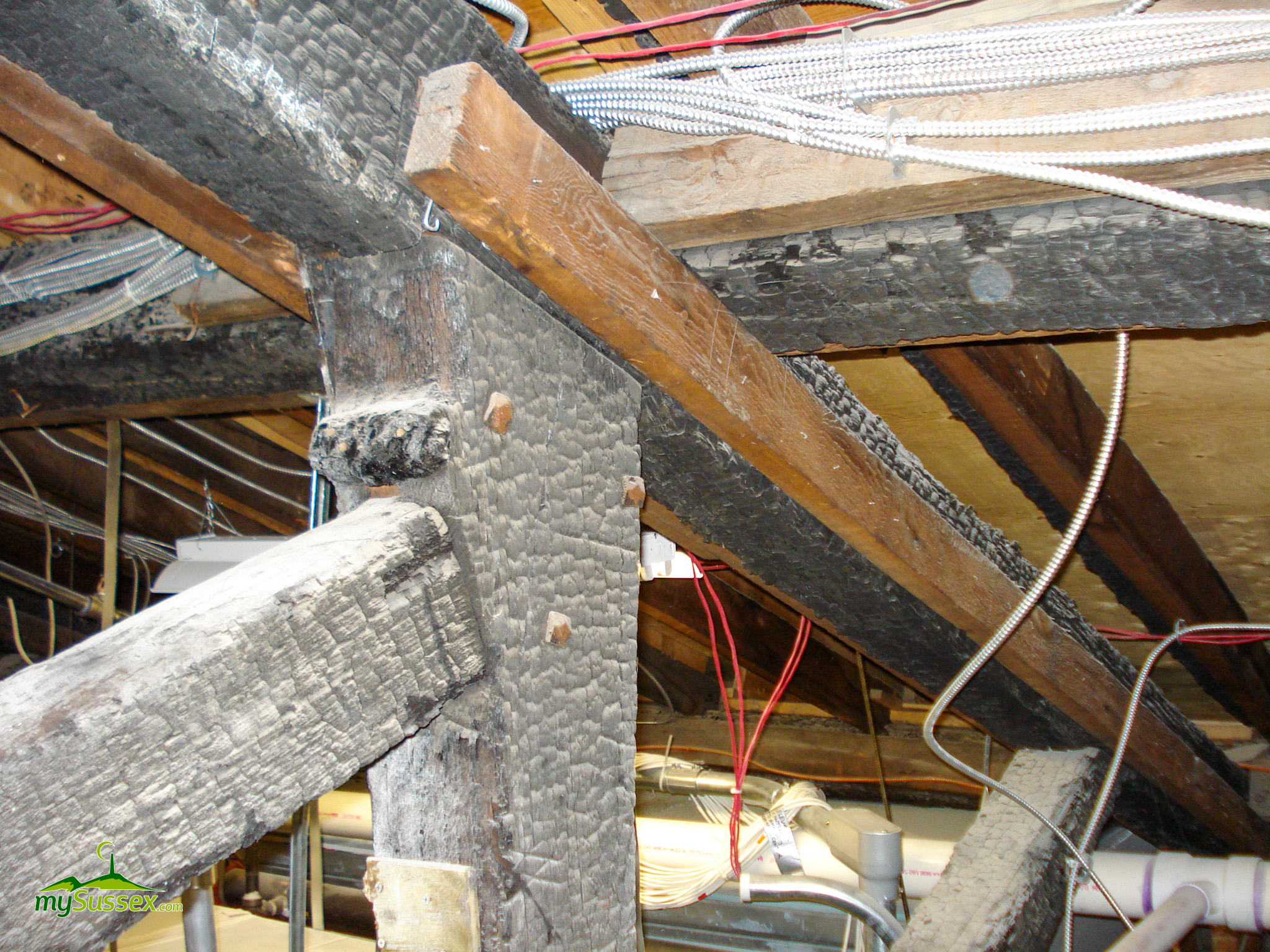
Behind the courthouse’s polished public façade, I found heavily charred beams still visible overhead. Seeing them in person made the building’s history feel much more immediate than any plaque, photograph, or written account could.
The 1847 fire permanently reshaped the courthouse, but the charred attic beams visible today are generally associated with a second fire in December 1910. That later fire caused extensive damage to the courtroom, attic, and cupola.
More than a century later, the burned timbers remain visible in the building. They are a striking reminder that the courthouse is not simply a historic-looking structure. It is an active public building that has survived fire, reconstruction, renovation, and generations of Sussex County history.
Historic Trials, Executions, and Public Spectacle
The Sussex County Courthouse has handled generations of civil disputes, criminal cases, property matters, elections, and county government business. It has also been connected to several of the county’s darkest and most memorable criminal cases.
The National Register nomination notes that the courthouse did not host a nationally famous trial. Still, the building witnessed cases that became major public events in Sussex County.
The John Cruver Trial and Execution
One of the best-documented cases involved John Cruver, who was charged with murdering Allen Skellenger in Sandyston Township in 1861.
Cruver was convicted of murder and executed in the courthouse courtroom in January 1862. Gallows were reportedly borrowed from Morristown, and approximately 200 people witnessed the execution.
The case illustrates how different the courthouse’s role was in the nineteenth century. It was not only a place for hearings and filings. It was also a setting for highly public criminal punishment.
John Hughes
John Hughes was convicted of murdering his wife in Ogdensburg in 1875. Historical accounts describe the killing as especially brutal and note that Hughes attempted to conceal the crime by burning evidence.
After a three-day proceeding, Hughes was convicted of first-degree murder and executed in the jail yard behind the courthouse.
Frederick Crill
Frederick Crill was executed in 1880 after being convicted of killing his daughter, Eliza Babcock, near Hamburg.
His case was notable because he became the first person executed under a New Jersey law that restricted public attendance at executions. Earlier executions had often drawn large crowds, but Crill’s execution reflected a shift toward more private punishment.
Alexander Kish
Alexander Kish was the last person executed in Newton. He was convicted of murdering his wife, Gertie, during a dispute over money and was executed in 1904.
The final executions connected to the courthouse occurred in the jail yard behind the building, where Sussex County’s criminal justice system once had a much more public and physical presence than it does today.
More Than a Courthouse
The Sussex County Courthouse has served many purposes beyond court proceedings.
During the nineteenth century, the building hosted Presbyterian Church services while a new church was under construction. Horace Greeley delivered a lecture there in 1861 because Newton did not yet have a theater or opera house.
For generations, the courthouse and the Newton Green functioned together as the civic heart of the community. The courthouse was where people came for legal matters, government business, elections, public meetings, military activity, religious services, and major community events.
The Landmark at the Heart of Newton
The Sussex County Courthouse was added to the National Register of Historic Places in 1979 because of its architecture and its importance to local government and Sussex County history.
It remains one of the visual anchors of Newton, paired with the Green, surrounding historic homes, churches, government buildings, and downtown businesses.
It is easy to admire the courthouse from across the Green and notice its columns, cupola, and imposing steps. It is harder to appreciate how much history has unfolded inside and around it.
This building helped establish Newton as the county seat. It witnessed Revolutionary-era military activity, prisoner detention, courthouse fires, public trials, executions, political life, religious gatherings, and nearly three centuries of local government.
The courthouse is not just a backdrop for downtown Newton. It is one of the reasons Newton became the town it is today.
Frequently Asked Questions
When was the Sussex County Courthouse built?
The original Sussex County Courthouse was authorized in 1761 and constructed during the 1760s. The present Greek Revival courthouse was rebuilt after the 1847 fire and reopened in 1848.
Why is Newton the county seat of Sussex County?
Newton became the county seat because Sussex County officials selected the site for the courthouse and jail in the 1760s. The courthouse drew government activity, business, housing, and public institutions to the area around the Newton Green.
Did the Sussex County Courthouse burn down?
Yes. A fire caused by a faulty flue destroyed the courthouse interior in January 1847. A second fire in 1910 damaged the courtroom, attic, and cupola.
Are the charred beams still visible inside the courthouse?
Yes. Charred beams associated with the 1910 courthouse fire remain visible in the attic, although that area is not normally open to the public.
Is the Sussex County Courthouse still in use?
Yes. The historic courthouse remains part of Sussex County’s judicial and government complex, alongside newer county facilities in Newton.
Sources and Further Reading
- National Register of Historic Places nomination, Sussex County Courthouse
- New Jersey Courts: Spotlight on the Sussex County Courthouse